Friday, April 17, 2015

Barking Dog Magna Cum Laude

[Feel free to print the Google document instead of reading the story as a blog post. Photo below by Bright Green Pants.]

kitty

“103 Brandywine Lane.” Penelope lovingly pronounced the bordering streets, “George Washington Drive, Benjamin Franklin Place, Alexander Hamilton Terrace.” After all the Embarcaderos, Divisideros, El Carmelos, and Loma Verdes they had spent their apartment days on, the names seemed rich in history, evocative, promising a solid future. The house was a mix of architectural styles—a bit of dental work, a patch of fish-scale shingles, and a miniature widow’s walk. Maybe they would take off the widow’s walk at some point, but now they wanted to unpack their boxes for good and settle down. By Sunday night, Penelope’s workroom was set up with her drafting table and paint pots; and Bernie’s closet was hung with his business suits and coordinating shirts and ties.

“I love it,” Penelope said, Monday morning, kissing Bernie goodbye. “If this house were a horse, it would be an Appaloosa.”

Bernie thought about Penelope all day, her sense of humor, her talent, how much she loved him and how much he loved her, how lucky they were to have found the house. It made up for his job, his tortured dealings with Morrison, his boss. Somehow he couldn’t find an area where he felt simpatico with Morrison. He couldn’t zoom onto the right wavelength. They were both talking about Countdown Clothes; but Bernie, who handled advertising, couldn’t connect somehow to Morrison’s concepts. Actually, it was Morrison who couldn’t connect to Bernie’s concepts; but Bernie could not say that to anyone but Penelope, who always was on the same wavelength.

But the minute he walked into the house, he saw that she was close to tears.

“I’m ready to tear out my hair,” she said. “The dog next door barked nonstop all day. I nearly went bonkers.”

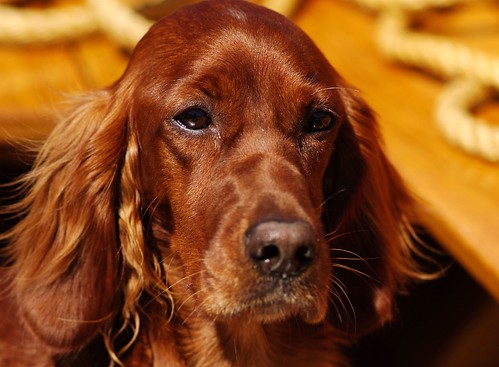
Bernie rubbed his hands back and forth over her shoulders until he felt her relax, go soft against his body. How could he have known the neighbors’ dog would bark like a maniac. When they looked at the house, the dog, a beautiful Irish Setter, was sitting quietly on the neighbors’ patio, looking as if he didn’t have a bark in his head.

“As soon as we can, we’ll move, sweetheart.” Bernie would have said anything to make Penelope feel better, anything that would cheer her up.

They both knew that moving was not an option. Their finances were already stretched. It was a double bind. If Penelope weren’t freelancing at home, saving the money that a studio would have cost, they couldn’t afford the monthly payments; and it was because she was working at home that the barking dog was driving her crazy.

“Surely we can solve this problem,” Bernie said. The idea that an Irish Setter was going to dictate their lives seemed ridiculous. Irish Setters were supposed to be even-tempered, good with children. This one seemed singularly dedicated to full-time barking.

Like Morrison. “Orders” he barked. “That’s why we’re here. Never forget it. Orders, orders, orders.”
Bernie wished he could work at home like Penelope. Together outsmart this barking dog and he would not have to hear Morrison barking every minute.

Penelope’s workroom, next to the neighbor’s patio where the dog was left all day, had excellent natural light; and if she could leave the window open, excellent cross ventilation. Their bedroom was on the dark side of the house.

“I felt so irritated today I didn’t get a lick of work done. First I tried ear plugs but they made my ears hurt and then I moved to our bedroom but the light was no good. I can’t meet my deadline if I miss another day of work.”

Bernie did the washing up so that she could get back to her drawing board. “I feel much better,” she said, kissing him goodnight; but she tossed and turned for hours and once she woke him up saying, “Stupid dog.” When he put his arm out, she snuggled against him and sighed in her sleep.

The responsibility! What if she weren’t a “liberated” woman with her own business and her own business card. How had men stood it before women took charge of their lives.

He wondered if Morrison’s wife snuggled up to him in bed. Miss McFadden, the secretary, said she bred dogs. He wondered what breed and Miss McFadden said, “Something like miniature long-haired dachshunds. The next time he was in Morrison’s office, he noticed a picture of his wife holding two puppies. They looked as if they were yapping at the top of their lungs and he told Miss McFadden she should type “Yap, Yap” and tape it to the picture like the subtitles in old movies.

“You are not bucking for a promotion, buster,” she said.

When he described his problem with the Irish Setter, she said, “Make a tape and play it back when they’re at home. Give them a dose of their own medicine.”

“I love it,” Penelope said. “Would it be possible that dog owners enjoy dog barking the way opera lovers love opera singing? Perhaps he’s an Irish tenor and we are simply not tuned into dog arias.”
The worst of it was that they didn’t know the neighbors at all. How could you complain to people you had never met.

ESP didn’t help. They both concentrated like crazy when the dog was let out for the day and the neighbors went off to work. “Don’t bark, don’t bark, don’t bark.” He concentrated so hard that he jumped when the dog started up. “What have we done to you?” No matter what the dog meant to express, his barking sounded to Bernie as if he wanted to chew them to bits, just the way he felt when Morrison spit out, “Orders! Orders!” All day he thought about the problem. He called his friend in the Legal Department and got suggestions Formidable. First they would have to make polite requests, give the neighbors adequate time to comply, etc.

“Get a dog yourself and let them bark at each other,” the friend said. For that he needed a law degree? He was so upset thinking how upset Penelope was, he was sure that Morrison would notice; but Morrison was having an off day.

Miss McFadden whispered, “He’s in conference, having a little nappy on his sofa.”
Bernie wondered if Morrison’s wife’s dogs barked all night and kept Morrison awake. Could he be an ally? It was hard to imagine.

Just before five Morrison called him into his office. Bernie made a point of staring at the picture of Mrs. Morrison with the dogs, but he didn’t say anything. There was a report he and Morrison were supposed to go over.

“Your wife work?” Morrison asked.

“She works at home—freelance artist. Or she did until the neighbor’s dog started driving her crazy.”

“My wife breeds dogs,” Morrison said. “Damnedest hobby a person could have.”

Bernie smiled in the direction of Mrs. Morrison’s photograph and held on hard to the chair in front of him. He would be able to recall this conversation for Penelope with no strain. He felt his brain recording it for all eternity. Lately he had felt his brain whirring on and off with the slight sound a computer makes in action, little starts and stops, wait, saving file, etc. Barks at home, bites in the office.

“They’re a noisy bunch—dogs.” He was trying to look neutral, but he wasn’t sure he was doing a good job.

“An Irish Setter I think. Would you be able to tell by the bark? Do breeds have different barks? I could bring in a tape.”

Morrison laughed and stuffed the report in his briefcase. “You’re the sly one.”

“My wife says I have hidden depths, but I’m not sure what she means.”

Morrison frowned. “God knows what it is they want—women, I mean.”

Ben nodded. He hoped the telephone would ring. Where was Miss McFadden? Why didn’t she interrupt?

“I’ll take this home tonight and we’ll go over it tomorrow,” Morrison said finally.

************

Penelope held her hands over her ears. She felt as if her auditory sense had taken over her whole life.

The noise ordinance was confusing. It specifically referred to leaf-blowers, so many decibels allowed. She liked the word decibel. It made her think of a poem by Edgar Allen Poe.

“You might as well try to prevent conversation,” the woman at City Hall said when Penelope described the situation. “Try Small Claims Court.” Do dogs have free speech rights, Penelope wondered. Is speech a survival instinct? The dog only barked when the owners were not there, which was most of the waking day. He must be experiencing loneliness, but why did his vocal chords collapse. Did the constant exercise of the bark increase capacity and strength to bark.

At first she thought it was the garbage truck the dog was barking at, but that would explain only one morning of the week. Dogs were dominated by their sense of smell just as she was dominated by her auditory sense. It was imperative that she develop a strategy.

************

Together Bernie and Penelope worked on a formal letter of complaint, trying to achieve just the right tone. After all, they were going to be living next to these people for a long time. Just as they were putting the finishing touches on the letter and were ready to run it off on their printer, using Penelope’s letterhead to emphasize her professional need for peace and quiet, the phone rang. It was Flora, next door, who introduced herself and invited them over for drinks on Friday.

“Thank you, we’d love to,” Bernie said. “Flora and Lance. And we are Bernie and Penelope. Oh yes, you also have Rusty. We will look forward to getting acquainted.”

“That’s a break,” he said, turning to Penelope. “Now we can address them by their names. If we can’t negotiate something, we can still send the letter.”

“I’ll make a tape of that damn dog barking his head off.”

“They may not believe you, but it’s worth a try.”

The next morning as soon as the dog started, Penelope plugged in their tape recorder and ran the microphone out the window. She filled one side with continuous barking. She listened for nuances of barking. When he stopped for a minute, she assumed he had gone to his water bowl. Second verse, same as the first, a little bit louder and a little bit worse. She thought of the other Irish Setters she had known. All she could remember was how beautiful they were, nothing at all about barking. Lassie, who of course was a collie, never barked except in extremis. Lassie was so thoughtful and caring and capable that a mere child was his master [sic]. Was she incompetent, at fault in this matter of the barking dog. She put the tape and tape recorder by her handbag.

************

On Friday when Bernie came home from work they went into conference. “What should we do first? How should we go about this?” Planning was essential. He had seen too many sweet deals fall through because somebody had forgotten to take care of the details, decide who was going to say what.

Bernie would bring up the subject of barking, diplomatically. Penelope would play the tape if they needed evidence.

“Never assume anything,” Morrison said and although he hated to agree with Morrison he had to admit he was right on that assumption. When he went into conference with Morrison he felt the carpet had found inches of foam underneath. Unnerving.

“Everything’s soft until it’s firm,” was one of Morrison’s favorite sayings.

Penelope decided she would wear slacks and sandals for their visit to the neighbors; Bernie changed into his suntans and his Hawaiian shirt. “If you were a dog,” he said, “You would never have to change your clothes.”

“You would have more time to devote to your barking,” Penelope said. “Your output.”

Flora opened the door and led them through the living room to the side yard. Rusty was sitting quietly next to Lance, who said “Stay” and walked towards Bernie and Penelope with one hand behind him.

“Glad you could come over,” he said and extended his other hand. “We’re training Rusty by the Barbara Woodhouse method, but sometimes the hand signals get in the way of other uses you want to make of your hands. Sit down, please.”

Flora appeared with the leash and attached it to Rusty’s collar. She held her hand at waist height, slightly cupped with the leash strap over two fingers and then slapped one hand against her leg as she said, “Walk, Rusty,” and made a quick circle around the patio. “Barbara Woodhouse calls this walkies,” she said. She leaned down and praised Rusty, “Good dog.”

Penelope thought, we’ve lost.

Bernie said, “Is there a command for ‘don’t bark’?”

Penelope pointed to the window of their house where her workroom was. “You see, I work at home and Rusty barks a lot. It’s hard to concentrate.”

“I’m so sorry,” Flora said. “I had no idea. I do hope it won’t happen again. Let him get acquainted.” She stopped stroking Rusty and gave him a push in Penelope’s direction.

He leaped across the patch of grass and sniffed at Penelope’s sandals. She could feel Flora watching for signs that she was flinching. She remembered her English professor explaining how the poet achieves his purpose in a poem by throwing the dog a juicy piece of meat while he gets on with ransacking the house. It was an idea she had intellectually accepted, but never realized emotionally before. It had seemed so vague—though presented by the professor in such a spellbinding way—she felt struck dumb with the clarity of it while Rusty slobbered on her big toe. She reached for one of the cocktail napkins and dried her toe. Then she ran her hand over Rusty’s head. She felt his response and repeated the stroke. He moved closer and rested his head on her knee. “Rusty,” she said without meaning to, or had she said ‘precious’? She looked at Flora, who was smiling proudly.

Lance came out with a tray of wine glasses and a bottle of wine. Flora followed with a tray of cheese and crackers. Tucked under her arm was a folder. She showed them a photograph of Rusty wearing a Mortar Board. “It was a package deal. There’s a fancy certificate with a gold seal. We decided not to frame it. After he graduated from obedience school, we saw the Woodhouse method on television and decided to give him a postgraduate course.”

“You look very intelligent,” Penelope said to Rusty. She struggled to keep a straight face.
“What about the tape?” Bernie asked when Lance went back for ice and Flora took Rusty into the kitchen for his feeding.

“There’s no plug out here and I forgot to get batteries. Somehow it didn’t dawn on me that we’d be outside.”

“No matter, we can save it for later. He’s a beautiful dog. He doesn’t look like a barker.”

“They seem very pleasant, but it’s clear that they don’t believe me since the dog doesn’t bark when they are home. ‘She hopes it won’t happen again.’ She thinks I’m referring to an isolated incident.”

Bernie felt hopeless. He remembered a line Miss McFadden used a lot, especially when he complained to her about Morrison. “Sometimes you can’t win for losing.”

************

The next morning Penelope thought Rusty wouldn’t bark. Now he would know that he had a friend next door. As soon as Flora and Lance drove out of their driveway, the barking began.

“Maybe you could talk to him a little and he would shut up,” Bernie said. He felt guilty leaving Penelope, but Morrison was a bear about tardiness.

“I’ll try,” Penelope said. “I can’t take another day of racket, no matter how educated.”

When she went outside, Rusty was running back and forth along the fence barking as if his life depended on it.

“Rusty, good boy, don’t be upset. I’m here all day. I’ll be your friend.”

He stopped and looked at her. Then he pushed his nose against the fence.

“No, don’t do that,” Penelope said. “You’ll get your nose caught. Wait a minute.” She went into the kitchen and cut up a turkey hot dog. Would he care if it were heated or not? She doubted it. She tossed the pieces over the fence and thought maybe he barks because they don’t feed him enough. She ran back into the house and telephoned Bernie.

“Did it keep him quiet?”

“I don’t know yet, but I just wanted to report.”

“Could you go over to their patio and work on their picnic table?”

“I don’t feel right about doing that. Suppose one of them got sick and came home unexpectedly from work. Or suppose the meter reader came by or who knows what. It sounds too much like a Raymond Carver story, you know the one where the couple tried on the other couple’s clothes.”

“Well, you’ll work it out somehow,” Bernie said. He could see Morrison coming down the hall towards his office. “You can’t let a stupid dog ruin your life, our life.”

“He’s not stupid. He’s like a child being left along all day.”

“Oh, I didn’t mean that. I’ve got to go. Morrison’s on his way to bark at me.”

“He’s a very smart dog.”

“Right. Right. Goodbye.”

************

As soon as she hung up she could hear that the barking had started again. Maybe it was squirrels he was barking at. That would be only instinct. She raced around to the gate and opened the latch. “Rusty, old barker. Quiet down.”

Rusty came towards her and waited to be petted. His leash was hanging by the back door. She said, “Sit.” He sat. “Good dog.” She snapped the leash on and said, “Walkies.” Rusty followed alongside her and she brought him into her yard. “What a good dog.”

Shouldn’t she reward Rusty for being a good dog. She picked out the meat from some left-overs and put it on a plate. She found a bowl for water and stroked his beautiful, silky coat. “Just a tidbit, you wouldn’t want to lose your appetite.” She stroked his head again and thought what a wonderful color his coat was. She brought him into her workroom and closed the door. He lay down very calmly on the rug. Penelope thought she heard a sigh of relief. “That makes two of us.” She did a quick sketch of Rusty curled up on her rug, then she settled into her job.

At four o’clock she led Rusty back to his yard, petting and praising him. The minute she closed the gate, he started barking.

************

When Morrison called him into his office, Bernie told him about the photograph of Rusty wearing a Mortar Board.

He waited for Morrison to have the idea. He was sure it would emerge. “You mean barking dog magna cum laude.”

Bernie laughed. Morrison laughed.

Miss McFadden said, “Good boy, Bernie. Good boy.”

************

The next morning Penelope opened a can of roast beef hash and poached an egg to go on top. “I don’t think you’re eating a proper lunch,” she said to Bernie. “You’d better have a good breakfast.”

She set aside half the can for Rusty and put it in a pie tin. It looked a lot like dog food anyway, she thought.

Bernie poured ketchup over his hash and broke the egg. “I’m afraid to eat lunch because I’ll get sleepy in the afternoon and I don’t have a sofa in my office like Morrison.”

Penelope wondered what other things she could cook that Rusty would like. Probably she should get dog biscuits. They were supposed to help keep the teeth lean.

As soon as Bernie left she turned on the TV and flipped channels until she found a commercial for dog food. The dogs were not nearly as intelligent-looking as Rusty.

When she went to the grocery store, she looked in the pet section at the flea collars and toys. A woman stopped and picked up a flea collar. “These are really good,” she said. “What breed of dog do you have?”

“Irish Setter,” Penelope said.

“I like little dogs,” the woman said. “Mine’s a Boston.”

************

When she got home, she didn’t feel like settling down to work. Rusty would probably like a walk. Maybe it was exercise instead of food that would keep him from barking. Maybe it would calm her nerves as well. She has never done a sneaky thing in her life before. She wonders if people who steal babies from buggies feel as excited as she feels now. She attaches Rusty’s leash and starts down the street. Who would know it’s not her dog? She looks like a dog owner, she knows the commands.

[Undated short story by Virginia McKinnon Mann.]

Wednesday, March 25, 2015

Extremely Alert

[Feel free to print the Google document instead of reading the story as a blog post. Photo below: TOMBOLO! by Pat.]

TOMBOLO!

The groom’s mother, shimmering blue watersilk with shoes dyed to match, dabs perfume behind her ears, saving a drop for the lacy handkerchief she slips in her purse, the very same handkerchief she carried when she and John said their vows. “Oh beautiful dress,” she sings, twisting to get a view of herself in the bathroom mirror. “You were there on that rack when I needed you most.” She believes steadfastly in omens of good fortune and looks for them everywhere. “Something old, something new, something borrowed, something blue.”

She is the something old, the bride is the something new, her dress is the something blue; and if only the bride will ask, her handkerchief will be the something borrowed.

Randy, elder brother and best man, fully and impeccably dressed, stands and folds a tiny square of flannel. The mother fidgets as he tucks the flannel carefully into his shoe kit, recognizing the pattern as belonging to his once-favorite pajamas. That would also be something old, but the best man does not traditionally have superstitions. Perhaps Clifford, the groom, will wear a penny in his shoe for good luck, or should she be the one to wear a penny in her shoe, her luck having deserted her so long ago when the boys were mere babies and she lost their father. Will today be one of her heightened awareness days, she wonders and pours the second cup of coffee that she almost drank down the lavatory drain. Even so, she is likely to remember too much, to see and hear too clearly.

“Extremely alert,” Randy says, “You look extremely alert, Mother dear,” and she asks if he means to bless or curse her.

Clifford, half dressed, opens the hall closet and pokes at a set of golf clubs. “Can’t find my black shoes.”

“You’ve never put shoes in there,” the mother says. She hears a tinge of hysteria in his voice.

“I’m looking for the flashlight; where is it?” Clifford straightens. “The blooming light’s out in my closet.”

“Flashlight?” the mother says, remembering the flashlight dead and leaking a month ago and writing it down on her grocery list but not remembering to buy one. No point now in making a full confession… Full confessions never make anybody feel better.

Clifford grins, “I had my teeth cleaned. Nobody can say I didn’t have my sweet little old teeth cleaned.”

Randy shakes his head. “The poor bride. Poor, poor Nancy.”

“Don’t say that.” The mother sighs and puts her arm around Randy’s waist. Be quiet, tongue. She cannot stop this banter between brothers. Their father should be here to deal with them man to man. It isn’t fair that widows should be left with everything to do. She hums the wedding march.

“Do shut up,” they say like twins.

“I still think we should have a limo.” Randy holds up his new wallet, a gift from the groom. “I can afford it.”

“I know you can, dear, but I couldn’t. Conspicuous consumption makes me feel ridiculous.”

“Obviously.” Randy looks pointedly at the sofa bed he has slept the night on and at the coffee table pathetically in need of refinishing. He has offered to replace both pieces and been shushed.

She thinks this very minute, when they have not even left for the church he is picturing her returning to this wreck alone—their home sweet home. No apologies. Too late for being in the kitchen baking cookies. Too late for making the children’s beds.

Randy picks up a purplish ashtray and empties it in the fireplace. “I might have been an artist—professionally, I mean. This work shows real promise.”

She watches him handling the precious objects from her desk—his perfect hand in plaster from the Mother’s Day he was five, Clifford’s balsa-wood hotrod painted fluorescent pink. She silently screams, “My collection—don’t touch.”

“Look at that glaze.” He holds the ashtray under the lamp. “The purple blob. Outstanding.”

She remembers the expression of pride on his first-grade face. “You took it out of your bag so calmly and handed it to me as if you made ashtrays every day of the week.”

“The teacher kept saying, are you making that for your father and I didn’t want to admit that my father was dead or that my mother smoked so I said it was for myself.”

He smiles as if the faraway boy didn’t really need the father he was once embarrassed not to have.

The mother frowns and tries to remember how she felt when she was not yet a widow. “I thought you were happy in school. Naïve of me.”

“Not at all. Looking back—as a man of experience… First grade teachers are viewed somewhat uncritically.” He touches her shoulder “… while Mothers are always Mothers.”

“Of course, what else could we be?” She thinks, now it is open to question with surrogate mothers all over the place but for me it was an absolute state. She wants to say, “And you might have had (almost did have) a different mother.”

She checks again to be sure the lacy handkerchief is in her purse, the handkerchief John’s mother gave her for “something borrowed”—still beautifully white and perfectly ironed in case Nancy should turn and ask if she has “something old.”

“Perhaps I do,” she would say and offer the handkerchief. No reason really she should expect Nancy to ask. Weddings were fantasy enough without adding her own, but she would have it if Nancy should want it, though probably brides didn’t have those little superstitions anymore. Nor grooms.

Clifford all dressed now except for shoes, comes into the living room, twirling about in his stocking feet, coattails flying straight out like a turkey cock’s feathers.

“Not in your closet?” the Mother says.

“Did you send them out to be polished? That might be it.”

Randy, as always, thinks of the one logical course of action the bridegroom might have taken and a conversation from weeks ago about dress suits and black patent shoes comes back to her, some vague admonition she gave to have his shoes smartened up and marking that off her mental list of things to mention. He is a grown man, after all, about to become “head of household” or is there any such thing anymore?

“What am I going to do?” Clifford for the first time looks stricken. “I thought I was all set. I did every stupid thing on Nancy’s list.”

The Mother starts. Nancy’s stupid list? Does the bride make a list for the groom? She doesn’t remember making a list. She pats her tiny hat into place and stands back from the hall mirror to check her slip. Hang in there underwear. Don’t give up the ship garter belt. Don’t have a sneezing fit nose.

“I can’t believe you expected me to provide you with a pair of black shoes,” Randy says. “Nancy didn’t give me a list and mine won’t fit you.”

“No, I’m sure I didn’t expect you to provide shoes. I bought the ring.”

She looks at Randy’s watch and remembers John slipping her ring on and how totally married she felt from that moment on.

“What am I going to do? Go barefoot?”

She wonders if Nancy has ever heard that in his voice, a kind of hysterical silliness. John couldn’t stand silliness.

“I know my feet are bigger than yours.” Clifford glares at Randy as if he meant to punch him, but instead brings out from behind his back a pair of black basketball shoes covered with dust.

“Don’t breathe, Mother.”

“Clifford, look at your knees.”

Randy opens his suitcase and offers his clothes brush.

She holds out her hand. “I’ll do it.” Adrenaline sweeps through her body. She orders Randy, “You get the taxi.”

Clifford stands stiffly for her to brush his suit.

She tries to remember what their father wore on their marriage day and can only remember his sweet smile, his sweet arms around her.

“Are you sure you didn’t take your shoes to the shop? Look in your wallet and see if you have a ticker.”

Clifford turns his wallet out onto the table: credit cards, driver’s license, and small crushed ticket saying Shoe Renew.

They look at one another and smile. If nothing else the shoes exist, did not jump unwittingly into the Goodwill bag or self-immolate.

“Put on your loafers and we’ll swing by and get them.” Randy locks the door and pushes the elevator button.

“They say that stuff about selling things if you don’t pick them up, but they don’t really do it.”

“Right.”

How handsome he is hurrying down the street while Clifford stands serenely gazing at the stone steps across the street. What can he be thinking? She cannot believe that in forty minutes he will stand beside his bride and repeat the holy bonds of matrimony. Should she tell him about the birds and the bees?

“You look lovely, Mother-of-the-Groom,” Clifford says.

She squeezes his arm and thinks how easily she found her white gloves, how perfectly her shoes match her dress, how unlike herself she looks today.

“You’re absolutely psychic,” Clifford said every time she turned up a missing cufflink and she basked in it. Now she is suffering from her eternal mother’s pride. The Groom’s mother has so little to do, she might have remembered shoes. Too late, too late.

They climb into the taxi, mother in the middle, the place she claimed—keeping them apart because each always wanted a window. Now Clifford would have his own ally and she would keep still. No matter what happened she would not speak. They could have babies or not have babies; she would never speak. They could live in Timbuctoo if they wanted—but no, no, no.

Randy leans across her lap. “Do you remember where the shop is?”

Clifford glares back. “I walk by the place every day.”

“Don’t start that.” She puts a hand over each big fist. How small their father would have looked between them. They were huge horses beside him. They would think him too small, too delicate. But he would be with her, not them, and he would not be too small.

“Why didn’t you pick them up if you went by the shop every day?”

In that moment the mother knows that Randy will never marry, that his standards are too high, that he is not foolish and inconsiderate enough to marry, that he can settle for nothing less than perfection, and that she will never see his children.

“Driver, stop right here.” Clifford jumps out of the cab and points triumphantly to the window where finished shoes are lined in a row. He bangs on the door. “Anybody there?”

If this were a movie, she thinks, he would put his fist through and pluck out the shoes, without a scratch, while upstairs over the shop a couple would hear the commotion and frown down at the madman banging on the door and calmly close the shutters.

Randy gets out of the taxi and points to the CLOSED sign. “It won’t matter, Cliff. Nobody ever looks at the groom.”

Clifford lets Randy push him towards the taxi.

They settle on either side of her again, breathing heavily, saying nothing. Closing her eyes, she feels a memory break loose from where it has hovered all day waiting its chance to float free, a story John’s sister told her long after he died, how he courted a young woman for more than a year and planned to propose marriage, how the sister packed a picnic for him and he borrowed the family car to drive to a particularly romantic spot in the country to declare his intentions, and how just after they got started the car broke down totally. In his efforts to repair it, he covered his white linen suit with grease and dirt and was too embarrassed to propose. She looked away quickly from the laughing sister, feeling her heart pierced for poor John and the woman who might have been his bride.

She has never told the boys because she does not want them to think of their father as ridiculous and because they were never the right age to understand how nearly she had not been their mother. Now it comes rushing out, one word tumbling over the other as the taxi gets closer and closer to the church.

Randy pats her hand. “That was a bit of a close call, old dear.”

Clifford stares out the window as if he has not heard one word.

Perhaps she should not have told the story today, or ever. They could care less that they exist quite by chance.

The church looms in front of them, covering a city block with its sanctuary, inner courtyards, library, and fellowship hall. Randy leans over and hands the driver a bill. “Take us to the side entrance and then drive slowly around and leave our mother at the front steps.” He turns to her and whispers, “Our extremely alert mother.”

She watches them enter by the choir door, Randy with his arm around Clifford’s shoulder, showing him with the other hand that the ring is safe in his waistcoat pocket. They turn and throw her a kiss, as if it were a lark, some debutante party they are attending in search of a wife and might yet emerge from with unsettled feelings. She feels quite the wallflower in advance and longs for John to hold her, to give her his arm for the long walk down the aisle.

“Tears, get back where you belong.” She leans back hard against the seat, clutching her purse with an edge of old lace caught in the clasp.

[Undated short story by Virginia McKinnon Mann.]
Sunday, March 15, 2015

The Silver Belt Buckle

[Feel free to print the Google document instead of reading the story as a blog post.]

I look in the mirror and smile as broadly as possible. I think that if teeth are all it takes, I will be quite successful. I part my hair in the middle and see that I look old-fashioned like Uncle Matthew. I pull it forward and smile rakishly; now I am my father all over.

The silver belt buckle I am wearing belonged to my grandfather, my mother’s father; and for many years my mother thought that it lay buried with my grandfather’s remains. She thought that Uncle Matthew, who lived with Grandfather and made all the funeral arrangements, had not wanted me to have the silver belt buckle, that he had been resentful that I, not he, shared these engraved initials. See how beautifully they are cut into the silver; a Mr. Farrier, a great friend of Grandfather, gave it to him. He was a jeweler and did the engraving himself. Grandfather, an open, warm-hearted person, had lots of friends but Mr. Farrier was his best friend. No one has ever understood why Uncle Matthew, his only song, could grow up to be solitary, never marry, and be interested only in rocks.

Nothing however has ever seemed strange about Uncle Matthew to me. I have always loved and admired him and I was watching when he walked up to the front of the church for his last look at Grandfather. I saw him reach inside the coffin and slip this buckle into his palm. I saw him execute that sleight of hand because I was seated to the side of the front pew, while my mother’s weeping face was turned into my father’s shoulder and his gaze was directed to the tip of his shoe.

When we visited on the anniversary of Grandfather’s death and drove out to the cemetery to lay flowers on his grave and on Grandmother’s grave next to him, she must have thought bitterly of the buckle deep in the ground. Yet she never asked Uncle Matthew or me if what she thought to be true was true; and while Uncle Matthew may have known what she was thinking (may indeed for all I know have rejoiced in her bitterness) I had not a glimmer. Some secrets are kept out of ignorance. That was why I never spoke of what I knew. The belt buckle would be mine when I had grown big enough to wear long pants and need a belt. I understood that condition just as I understood my mother’s fear that I would not grow up to be “normal”, that I would choose a strange profession such as geology, never marry, and give her no grandchildren. Yet her concern for my future life assured me that there would be a future life, that nothing could stop me from growing up. It was as if her thoughts of me as an adult, odd and reclusive as I possibly might be, staved off disease and pestilence, prevented the Angel of Death from discovering my whereabouts. I have always felt lucky. This buckle is lucky because it is a gift of love.

Before I was born, my parents had elected to live in San Francisco and even after I was born, they found that an apartment was quite large enough for their needs. It was because they could always drive down the Peninsula any weekend to visit Grandfather that they felt no need for a house and land. I was sent to visit every summer while they went to other large cities around the world for their vacations of more operas and museums and fine restaurants. They were relieved that because of these annual exposures I would grow up with a proper understanding of the natural world. Although they had chosen to be city dwellers, they said, it did not mean that they scorned the life Grandfather and Uncle Matthew led; but they regarded it as an existence more suitable for children than for adults such as themselves.

“They’ve sent you to rusticate,” Uncle Matthew always said when I arrived for one of my annual visits. “Let’s go out to see the sheep.”

We would lean on the fence and Uncle Matthew would give the sheep a report on the evening news, announce some earthquake in China or an eclipse of the moon we could expect to see next week if the clouds weren’t took thick. I knew that it was myself he was educating, but it was a good joke that the sheep had an interest in world events.

They were Blackface which Grandfather had bought from his friend Mr. Farrier and their startling black masks against the white fleece put me in mind of Halloween, false teeth, and the old saying about “wolves in sheep’s clothing.”

Yet like all sheep they lay low and spent their whole efforts cropping the meadow, their strong, occlusive teeth never still until every blade of grass was nipped clean to the ground.

“You can’t fool a Ewe,” Uncle Matthew told me. “You can’t make a Ewe take another Ewe’s lamb. If the mother dies, the lamb will die. It’s the damnest thing about sheep. You can’t teach them a thing.”

It was this passion for teaching me everything he knew that endeared Uncle Matthew to me, that the affection we shared for Grandfather.

“He’s been looking for you all day,” Uncle Matthew would say, having given my parents a chance to greet Grandfather privately and tell him anything they wished before I was brought back to the house. Or was it that Uncle Matthew loved me and my company so much that he wanted to be with me first. So glorious wooed—how could I have been happier.

Turning away from the pasture, we visited the chicken house to collect the warm eggs, both of us laughing at the squawking, offended chickens as they half-jumped, half-flew from their boxes. Better yet, I was allowed to place the thin glass eggs Uncle Matthew kept in the china closet into the nesting boxes. “Can the hens possibly believe those dead-white eggs are the results of their own efforts?” Grandfather asked me. “No,” he answered, “It is instinct that makes them start to set when the nest is full. They can’t think a single thing through,” he said sadly, as if he wished dumb animals had been dealt a better hand. But together we tricked the hens. [Note: the original version of this paragraph had Uncle Matthew saying that, not Grandfather.]

“It’s a blessing Mother can’t see how Matt’s let everything run down,” my mother always teases after one of our visits to Grandfather; and I thought she disliked Uncle Matthew because he did not take care of the house well enough, refusing to have a regular cleaning arrangement, letting spider webs accumulate in all the bedrooms, doing nothing at all with my grandmother’s rose garden. Did she wish that she could get rid of my father and myself so she could come back and look after Grandfather as her mother would have. I thought not. I know how she loved the city and how she neglected her own housework to read one historical novel after another. I did not mourn the way this unknown grandmother’s taste and habits of cleanliness were ignored.

I had eyes only for Grandfather who always as soon as our car had stopped was in the front yard holding out his arms for me to come running. As he lifted me up, his immense stomach pressed against me. How wonderful his stomach was, reaching out for me, never shrinking back. When he sat, it spilled forward against his legs and left little room for me to sit, but enough. I could never fall, secure in the crook of his arm. Such strength infused my limbs after one of these visits that a week or two would pass before my mother was saying “nervous little thing” about me again.

I was always an acute child, I have been told, startled by noises, offended by odors, distraught if a pianist hit a wrong note. When I began to take piano lessons myself, the poor piano had to endure kicks and scuffs from my nervous, impatient feet wanting to pay it back for those infelicities of my fingers. In spite of these difficulties which stemmed from my sensory acuteness, Grandfather accepted me with his whole being; I was secure in my favored position of namesake, secure in the knowledge that I would one day wear his silver belt buckle, engraved with our shared initials.

My mother and father would sit talking to Grandfather while he held me, telling some event from our life in the city or recalling the time when my mother and Uncle Matthew were the children of the family and vied for my place on his lap. My parents basked in the pleasure they were bringing him while Uncle Matthew, thin as a rail, glided like a ghost through the rooms; and I saw that he was very like the photograph of my dead grandmother which my mother carried in a locket around her neck, his features blurred by his quick movements: that is how I see the resemblance. It does not occur to me until many years later that he too is “nervous” or that he might be jealous of Grandfather’s love for me. Even then, I think it is hardly worth thinking about.

But I am not at all sure what Uncle Matthew’s position is. My parents always speak of the visit we make to Grandfather’s house and although they embrace and shake hands with Uncle Matthew, they never swerve from their attention to Grandfather. But they do stay up late after Grandfather and I have gone to bed talking over affairs with Uncle Matthew as I have known them to do at home when we have had visits from their old friends who lavish questions and looks on me until it is my bedtime and then when I am out of the way laugh and talk into the wee hours. I do not think so. Uncle Matthew excuses himself soon after dinner. He must get up early and drive to the geological station where he works. [The contradiction in this paragraph is a mystery.]

When Uncle Matthew calls and tells my mother that Grandfather has died in his sleep and she comes to tell my father and myself, weeping and hardly able to talk, I refuse to believe that he has died. I force myself to think of our last moments together, feeling his strong arms around my body as he carries me from the barn, not wanting my city shoes to get muddy and ruined. My short pants slide up and his belt buckle rubs against my thigh. I cry out at the coldness and he stops, looking down at my skinny legs. “What is it, little one? Oh, that, my buckle. When I die, you’ll have it to wear. I’ve told Matt you’re to have it.”

I pull a long face and squinch up my eyes, stamping my feet like a colt, wishing I could run into the pasture and be one.

“Oh, come now,” he says, always knowing exactly what I am thinking. “I’m not going to die anytime soon.” He shows me how easily the buckle unsnaps from the belt and puts it into my hand. I rub my nose across the initials (our initials) and ask why the metal is so cold.

“Because it has no life,” he says and swings me up into his arms again. “My boy, my own boy.”

When we arrive for the funeral I refuse to speak to all the Aunts and Uncles and Cousins who are filling Grandfather’s house.

“Where is he?” I demand, running from room to room, until Uncle Matthew tells my parents that he will see what he can do. He carries me to peer in the coffin; but I refuse to recognize the bodily remains, shaking my head wildly and thrashing about in his arms until he says to my parents that he will take me out to see the Blackface sheep.

I feel better away from the house full of strangers who claim to know who I am.

“You remember Mr. Farrier, my telling you about Grandfather’s friend Mr. Farrier who sold him the sheep and made the belt buckle for him?”

I nod yes. “Has he died too?”

“All of Grandfather’s friends have died; he was ready to go. We’ll miss him, you and me, but he was ready to go. He was getting very tired.”

“I don’t like it,” I say but I feel better.

“The sheep don’t like it either,” he says before we come back into the kitchen. I see pushed in a corner the great, black galoshes that Grandfather always wore flopping about his ankles when he went to feed the stock. He would carry me to the fence and set me there to watch him do his chores. “These sheep are better than a lawnmower,” he would say.

Friends and neighbors have brought in enough food to feed threshers, but someone must solve the problem of bedding down all these far-flung relatives. No one is callous enough to suggest a motel. Cots are found and dragged from the attic. Doubling-up is the order of the day.

My mother comes to me from the kitchen drying her hands as she walks through the room towards the sofa where I have burrowed into the familiar cushions, the wonderful smell of tobacco and male sweat overcoming the deadly odor of flowers which has filled the house. She gives her hands a brisk rub because she knows how I shy away from cold hands. “You are going to sleep in Uncle Matthew’s room,” she says, “And keep him company.” I am already half-asleep on the on the sofa. If only they would leave me there, cover me over with a coat or blanket or even pile the cushions over me, cover my head, let me wake up to find them all gone and only Grandfather and Uncle Matthew in the kitchen starting a fire in the wood stove. But my father must be summoned from his conversation with all these strange Aunts and Uncles to carry me up the stairs. Someone else has been assigned to the sofa.

He puts me down on a cot which has been set up at the foot of Uncle Matthew’s big double bed and leans over to kiss me goodnight. “We’re right down the hall,” he says. “I’ll look in on you before we go to bed.” They do not believe that a child should sleep in the same room as his parents or ever share their bed.

Perhaps he and my mother do look in on me, but I am fast asleep. I do not awaken until first light is entering the bedroom. Uncle Matthew is sitting on his bed in his shorts. He has taken his teeth out and his cheeks have fallen in. “Good morning,” he says and goes into the bathroom, his thin legs hairy and spindly. I remember Grandfather is dead and pull the covers over my face. I think, “If Uncle Matthew dies, so will I.” I sit bolt upright and begin to scream.

My mother and father come running into the room, barefoot and shivering. “What has happened?” my father asks.

“Nothing,” I sob.

“A nightmare,” my mother says. “Poor boy.”

My father lifts me up and carries me down the hall to their bed. My sobs are smothered in his shoulder. I fall asleep between them thinking that I have deserted Uncle Matthew. But I know that they can care for me, that the Angel of Death will not dare to visit our apartment in the city.

After the funeral when we are on our way home and they think that I am asleep in the back seat, my father says, “Old Matt hasn’t changed a bit, has he.”

“No,” my mother says and sighs. In a while she sighs again as if the years of knowing that Old Matt has not changed a bit stretched as endlessly in both directions as the road which we follow.

“Papa wanted” (she turns to see if I am still asleep and does not speak my name) “to have his silver belt buckle.”

“Matt didn’t know that, I suppose,” my father says.

“Oh yes, he did; but he knew I wouldn’t make a row about it.”

I think of Grandfather lying in his coffin with his girth circled and sealed with our initials and of Uncle Matthew going to lean over the coffin to touch Grandfather one last time and of the silver buckle in his palm, and the expression on his face as he returns to sit next to me, saying that I am not to tell and who would believe me anyway?

My mother who has cried steadily throughout the church service and at the graveside is still crying softly as she says, “It’s like everything else about funerals. As if he would ever stand again and hold us all in his arms.”

“I know, I know,” my father says. I can hear the bubbly noise that always comes before he blows his nose.

***********************************************

The next summer they decide that I am old enough to go to camp and I do not go alone again to Grandfather’s house. After our visit on the first anniversary of his death, we are never free again to drive down although my mother calls often just at 6 p.m. to see if Uncle Matthew is getting along all right. He always says that he is watching the evening news. She invites him to come visit us and tells him that I will share my bedroom with him, but he finds a million excuses for not making the trip.

On my twelfth birthday they decide that we will spend it with Uncle Matthew. As soon as we arrive and while my parents are walking about the yard (my grandmother’s roses are resurrected and full of blooms) to see how well Uncle Matthew has managed by himself, he invited me to his room and rummages in his bureau drawer until he finds a small grey jeweler’s box with the name J. Farrier printed on the satin lining of the lid. Imprisoned by a hidden catch, the silver belt buckle is difficult to lift out.

“Your grandfather wanted you to have this,” he says simply, putting the buckle into my hand. He shows what a snap the box makes when he closes it. “Like a snapping turtle.” He is trying to help me forget the coffin lid coming down so silently, closing Grandfather away from us forever and he keeps talking fast while I take off my belt and punch a new hole with the pocket knife my father has bought me for my birthday. I want to put on the buckle immediately.

“Do you remember Mr. Farrier who was Grandfather’s friend?” Uncle Matthew says.

“Yes,” I say, impatiently, as if it is the answer to an examination question. “He sold Grandfather the sheep. Right?”

When we come back downstairs and I push out my stomach so that my parents will notice the buckle immediately, my mother is dumbfounded. “All these years, I thought…” She kisses Uncle Matthew on the cheek. My father too is smiling. Uncle Matthew says it must be time for the evening news.

In some strange way, I feel that he has been defeated.

***********************************************

Several years later I am invited to a Halloween party given by one of the girls in my class at school. At the Novelty Shop where I have gone to select a costume, I linger over the wax teeth. Finally I pay for the pair which looks least ghoulish.

“There look almost as good as the real thing,” the clerk says and I want to say something funny in reply, but nothing comes to mind. I wish I had bought a rubber nose instead. I cannot bear the thought that someone (another boy at the party) will suggest the similarity of thin rubber, flesh-colored object. [That last was handwritten on the typed manuscript.]

At the party we begin by bobbing for apples, and I forget that the teeth are a part of my costume. As soon as the apple-bobbing is over we are served popcorn and candy corn and take turns telling ghost stories. All the lights are turned out for the ghost stories I am terrified of and following suit (like all fifteen-year-olds) I kiss the girls on either side of me. When the lights are turned on again the girls get out their lipsticks and giggle at the smears the boys have on their handkerchiefs.

At home undressing for bed, I forget about the teeth altogether and when the laundry is sorted they are overlooked and melted in the dryer, making unsightly grease spots all over my father’s best shirts. My mother is very distraught because she cannot understand what has happened, but I cannot bring myself to tell her. I put my hand to my throat and feel the great lump of Adam’s Apple and I fear that if I speak my voice will crack.

I long to see Uncle Matthew and reassure him of my love and friendship. I wonder if he still keeps the Blackface sheep and if he goes out to see them after the evening news and tells them what is happening in the world. “I was just watching the evening news,” he still says to my mother when she calls to see if he is getting along all right.

I roll around in my mouth the taste of love and the pleasure of love withheld. It is a taste both sweet and sour.

[Undated short story by Virginia McKinnon Mann.]